Tuesday, June 4, 2013

Forgiveness Option

怨恨是一袋死老鼠
在盧梭22歲那年的訂婚宴上,他的未婚妻愛麗爾卻牽著另一個男人的手,對他說:「對不起,我愛上別人了。」
 
呆若木雞的盧梭,在親戚朋友詫異的目光中無地自容。
 
這是莫大的羞辱!
 
經過良久的思索後,盧梭決定離開這個讓他傷心的家鄉,開始了流浪生涯,從瑞士到德國,再到法國……他發誓將來一定要風風光光地重返故地,找回自己丟失的尊嚴。
 
30年後,盧梭回來了,雖然兩鬢斑白,但他已經是當時著名的文學家和思想家。
 
有位老朋友問他:「你還記得愛麗爾嗎?」
 
「當然記得,她差一點做了我的新娘。」盧梭微笑著回答,一臉的輕鬆。
 
老朋友:「這些年來,她一直生活在貧困潦倒之中,靠親戚的救濟艱難度日。上帝懲罰了她對你的背叛!」
 
盧梭:「我很難過,上帝不應該懲罰她。我這裡還有一些錢,請你轉交給她,不要告訴她是我給的,以免她認為我是在羞辱她而拒絕接受。」
  
「你真的對她沒有絲毫怨恨嗎?當年,她可是讓你丟盡了臉啊!」
 
盧梭:「如果我提著一袋死老鼠去見你,那一路上聞著臭味的不是你,而是我。怨恨是一袋死老鼠,最好把它丟得遠遠的。如果我怨恨她,那這些年我豈不是一直生活在怨恨之中,得不到快樂?」
 
盧梭從口袋裡拿出一些錢遞給朋友,說:「希望這些錢能幫助她擺脫困境,生活得好一點。」
 
是啊,怨恨是一袋死老鼠!面對怨恨,如果我們能坦然相視,寬容一笑,就會找到快樂的源泉。
 
 
很有現代感的笑話!!
 
 
1. 斑馬深愛著小鹿,表達愛意時卻遭到拒絕。   
    斑馬大吼:為什麼?這一切都是為什麼?
   小鹿膽怯地說:我媽說了,紋身的都是不良少年。
 
2. 熊貓深愛著小象,表達愛意時卻遭到拒絕。
   熊貓大吼:為什麼?這一切都是為什麼?
   小象膽怯地說:我媽說了,戴墨鏡的都是不良少年。
 
3. 小雞深愛著小鴨,表達愛意時卻遭到拒絕。
   小雞大吼:為什麼?這一切都是為什麼?
   小鴨膽怯地說:我媽說了,叫「雞」的都不是好人。
 
4. 蜘蛛深愛著螞蟻,表達愛意時卻遭到拒絕。
   蜘蛛大吼:為什麼?這一切都是為什麼?
 ............................
 螞蟻膽怯地說:我媽說了,成天在網上呆著的都不是好人。
**............................
**在講你啦!*
 
天天開信,天天開心.

Saturday, November 27, 2010

Tuesday, August 3, 2010

Life is full of opportunities to practice the habit of "Seek first to understand, then to be understood." The other day I found myself interrupting someone in mid-sentence. She had to tell me "Let me finish." And I appreciate that learning moment. I'm grateful that she was assertive enough to tell me that.

"Seek first to understand" starts with letting someone else finishing their sentence and their thoughts.

Saturday, May 15, 2010

Get set and go


Get set and go
Originally uploaded by allnode
When I grew up in Hong Kong many years ago, people typically would not have waited for the traffic signals to cross the street. HK people were impatient and did not behave then according to regulations. Well, they have changed now. They do wait for the green lights. Goes to show people can change.

Sunday, March 28, 2010

Faith and Listening

According to John Maxwell and Jim Dornan a "person of influence" has faith in people and has the capacity to listen to them.

Here are some quotes about faith:
  1. When you believe in people, the do the impossible.
  2. Difficulties seldom defeat people, lack of faith in themselves usually does it.
In last LPG meeting, we shared perspectives on:
  1. What is faith?
  2. What does it have to do with trust?
  3. What does it have to do with prior evidence?
  4. Are you someone who grants trust first?
  5. Or, do you expect that trust must be earned?
We also discuss the merits of the following techniques to become a believer in people:
  1. Believe in them before they succeed.
  2. Emphasize their strength.
  3. List their past successes.
  4. Instill confidendence when they fail.
  5. Visualize their future success
  6. Put them in a position to experience small successes
A person of Influence...listens to other people. We talked about the following:
  1. No man would listen to you talk if he didn't know it was his turn next.
  2. Be impressed and interested, not impressive and interesting.
  3. The best way to impress someone is to let them impress you.

The slides we used to trigger our LPG conversations can be found here.

Saturday, March 20, 2010

Motivate In Action

Motivate, according to Maxwell and Dornan, is the second level of the 4M of Model (Model, Motivate, Mentor, Multiply)in "Becoming a Person of Influence".

Last LPG meeting we had good discussions on the meaning of Nurture as an essential element to practice "Motivate".

A person of Influence nurtures other people. And when you nurture others, you give them: "Love, Respect, Sense of Security, Recognition and Encouragement.

Some memorable quotes:

Love: The length and breath of our influence on others are directly related to the depth of our concern for them.

Respect: While love focuses on giving to others, respect shows a willingness to receive from them. Respect acknowledges another person’s ability or potential to contribute.

Sense of Security
People feel secure with you when your actions and words are consistent and conform to a high moral code that includes respect


Encouragement
When a person feels encouraged, he/she can face the impossible and overcome incredible adversity.

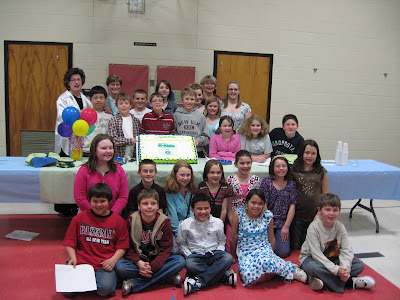
Last Thursday, I witnessed Nurturing in action when Kiwanis Rochester helped Harriet Bishop Elementary School form their K-Kid Club.

The adults: Kiwanis members, Harriet Bishop teachers, and PTSA, along with area K-School (Century, JM, Mayo) high school mentors, gave the elementary school students support and encouragement to start their own service club so that the students can develop the passion, skill and commitment to be in service to others.

From Charter K-kids


The kids elected their officers. There were multiple candidates for each office and candidates gave speeches and answer questions from their fellow club members. They showed poised, commitment and ability to think and speak on their feet.


I was inspired by their club charter night and glad to play a small part in it.

And that is Influence in action.

Next Monday, we will continue our journey to Becoming a Person of Influence.

Thursday, March 18, 2010

Thursday, March 11, 2010

Your Raise Me Up

I have been reflecting on Motivate, the second M of the 4M model in "Becoming a Person of Influence" talked about by John Maxwell after our LPG meeting this Monday.

Maxwell says one of the things we do when we motivate others is to encourage them. At our LPG meeting, however, there was some concern as to when encouraging someone becomes giving false hope, offering flattery, or building someone up to fail.

Tonight for some reason the song "You Build Me Up" kept coming up in my head. I even tried to hum it and played a few bars on the piano. Then I turned on TPT. There it was, Daniel O'donnell was just getting ready to sing that song. How much more a co-incidence can that be?

The song's lyrics speak precisely to what encouragement would do for someone.

You raise me up, so I can stand on mountains;
You raise me up, to walk on stormy seas;
I am strong, when I am on your shoulders;
You raise me up... To more than I can be.


Here is a link to Josh Groban's rendition.

I believe the habit to encourage others is to consciously act to raise them up so they can indeed climb mountains (small or large). It's having the attitude of focusing on other people's strengths and not their weaknesses.

Sunday, March 7, 2010

Organization Modeling

It seems to me that an organization can also benefit by using the 4M methodology being discussed in our LPG meetings to increase its influence on the domain in which it operates.

For example, Diversity Council has just refreshed its mission statement to:

Through education, we use our diversity as the foundation to build a healthy, inclusive, and prosperous community.

How we arrived at the new mission statement was through a process of being open to the diverse opinions from our board members and stakeholders. And it has been an educational process in which we respectfully obtained ideas and suggestions from everyone and modeled how to distill from the wide spectrum of ideas to an essence--a mission statement--that everyone buys-in.

We followed our DC board process. and refined how to use Web 2.0 technologies like discussion forums, goggle forms, etc and then wrapped up by focused face-to-face discussions to come to a consensus.

We work in a way that honors our mission statement. We have modeled how a transparent, open, diverse organization should work. That is a good thing.

Monday, March 1, 2010

Speech Contest

The IBM Toastmaster Club is running a speech contest this Friday. Several LPGers are taking part in it including me.

Speech making no matter how often I have done it still brings up the butterflies in my stomach. Being nervous is human nature. Shawn White talked about how nervous he was before his half-pike snow boarding jump at the Winter Olympics. That is the champion athlete who would win Gold by a wide margin.

Learning to deal with pressure takes practice. When an opportunity to practice presents itself, you go for it. The attitude of LPG is this: it's not so much whether we have to be good at something before we will do it; it's doing something so that we can become good at it.

At LPG for the last couple of sessions we have been talking about Integrity. At its core, it boils down to walking the talk.

TM speech contest gives me an opportunity to "talk" the talk (pun intended). And I will have a chance to practice talking about beyond labeling--a topic I really care about.

Guests are welcome at our TM meeting.

Monday, February 15, 2010

Becoming a person of influence

Last Thursday was our first LPG meeting of the year. The topic is based on John Maxell's book: "Becoming a person of influence."

I believe every one has a circle of influence. Some circles are larger than others. To say some one is becoming a better leader is similar to saying that their circle of influence has expanded.

I remembered when I first join the board of directors of Diversity Council I had a relatively small circle of influence. A year later, I can honestly say that I am making a difference: My views, my suggestions and my actions are noticeably influencing the group. And I am grateful for that.

With the knowledge of Maxell's book now, I can make a case that how I (or anyone for that matter)gain influence in a new circle is traceable to Maxell's 4M: Model, Motivate, Mentor, Multiply.

Maxell says Model is Integrity. But what is integrity?

I have a simple formula: Integrity is aligning your actions with your intentions. Or put it more simply, follow through:

If you promise or imply that you will do some thing, do it.

My intention (and my hope) is that I am wise enough to only make promises that I can keep and that I keep the promises I have made. For the next two weeks, I will keep a mental log on how well I am doing in this area.

Our presentation deck has other suggestions for you to use to track your Integrity index.

You decide.

Thursday, January 14, 2010

Travel Tip

This morning's Toastmaster meeting theme was travel tips and experience.

Here was the story that I shared:

On our honeymoon many years ago, my wife and I, courtesy of an IBM assignment. found ourselves in Paris. We went to visit the famous Louvre museum.

At the court yard, urged on by a friendly man who motioned to us that he would like to take a picture of us, naively we stopped and let him click his camera.

It was one of those instant photos. He then came over and asked us to pay something like 10 dollars for it. A great deal of money (at that time)for one photo. We were shocked. and said No.

The man said: "If you didn't want your picture taken. Why did you pose for me?"

We did end up buying the picture.

The lesson is: "Pose only if you want to spend the money."

Thursday, January 7, 2010

All for a good cause!

Happy New Year! I would like to invite all my friends to join my table at the 21st Diversity Council Annual meeting.

Please RSVP me to my facebook.

Friday, December 18, 2009

Making Connections

Why am I still an IBM Toastmaster now that I have retired from IBM?

The obvious answer is that I still want to improve my communication skills: whether it is to continue to develop the confidence and composure to be in front of an audience to MC an event, or to have a chance to practice giving speeches in subject matters (such as globalization, history or diversity) that I care about, or to learn to control my inner doubts and nervousness when asked to talk about something impromptu.

Retired or not, I still nurture a dream to become a motivational speaker--some day.

At my age, I don't know I am that serious about pursuing that dream. Along the way I came to know there is non-verbal communication that is deeper and arguably more inspiring than the technical aspects of speech making. The most basic attribute of communication is making connections with others. And just being present at a TM meeting--listening attentively and supporting the room--is an act of making connections.

Practice making connections is probably the not-so-obvious reason why I am an IBM Toastmaster.

Friday, December 11, 2009

Collaboration at Work

After Tuesday's US, China Town Hall Meeting, we received this nice message from National Committee thanking the Rochester community (RCTC, UMR, Mayo and citizen groups) on making it a special, memorable event:

Thanks for the article, report, and pictures. The kids look adorable! I’m amazed that the performance went on despite the vile weather! And 40 people is terrific considering the obstacles…

Hank was VERY impressed, especially by the interest evinced by the people with whom he spoke, and by the Mayo Clinic. He told me that he expected the fine medical facility; what surprised him was the humanity of the place, the obvious effort to treat people as people and not as interesting or challenging diseases.

It has been a pleasure working with you on CHINA Town Hall.

Note: PB article and photo's can be found on the Kiwanis West Web Site.

Tuesday, October 20, 2009

Do you believe in miracles?

Do you believe in miracles?

Another way to phrase the question is: "Do you consider yourself lucky?" That was the question Parul posted in a LPG meeting a couple of years ago. Several of us answered: "Yes."

And I remember saying: "I expect to be lucky."

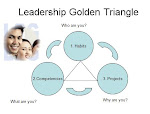
I didn't know it at the time. I was in fact mouthing off the Golden Leadership Triangle: the foundational LPG principles of iteratively working on Habits, Competencies and Projects.

The most basic habit is: Be Proactive. One way to be proactive is to "Begin with an End" and look for positive signs of progress--not longing for these signs, but continuously develop competencies and do projects that would lead to progress. But don't be picky about what those positive signs have to look like because God (the universe) works in mysterious way.

Here is an example.

Last year just before my retirement from IBM, at a special Toastmaster meeting organized by Rich and run by Mike on leadership and collaboration, Mike posted this question to the team, "What is your life purpose? And how do you know if you are making progress?"

When it came to my turn to respond, I said: "I will know when I am making progress toward contributing to building a "flat world" when I find and work on some human potential development projects".

Somewhat in jest, I added: "And you will know that I am making progress if you see me on the Post Bulletin."

A year later, I open up the Post Bulletin last night and found that there is something there that talks about, no, not me directly, but the work I helped do.

You see I have been helping Diversity Council build a web-based fund-raising event, which we call Non Event.

I knew that we were going to roll it out in November but had no idea that PB was going to have front-page article on it.

As I do LPG, the lessons I learn repeatedly are: Begin with the End in Mind, step by step (First Things First), develop the skills, do the work and deliberately, proactively and optimistically look for signs of progress. These positive signs do not have be exactly what you thought they would be like but you will know them when you look for them.

Next LPG meeting, we will recap and discuss the power of Golden Leadership Triangle.

What about you? Do you believe in miracles?

Thursday, September 24, 2009

Dealing with Difficult People

How to deal with difficult people? Don't we wish we had the magic formula to do just that.

How many times have we said to ourselves, "We can do so much better, if only we didn't have to deal with so and so?"

Last LPG we listened to several folk stories about difficult people and we discussed what wisdom we each drew from these stories.

For myself, the wisdom came from the introspective questions raised during our discussions:
"In relationships, am I the difficult person?"
"Am I sometimes being too insistent?"
"Am I not the stubborn one?"
"Am I really being pro-active? Do I seek first to understand?"

Since the LPG meeting, I relearned the lesson of: "Be the change you want to see in the world."

Be a bit more patient, be a bit more open-minded, be a bit more optimistic, have a bit more faith that things will work out.

With that mental adjustment, things have turned out pretty well.

And it has been quite a couple of weeks with a number of delightful "wins"--the latest is an opportunity to work with RCTC to host a China-US Town Hall meeting in December that has potential national visibility.

Tomorrow's LPG meeting, we will continue with How To Deal with Difficult People. Given the results from our last meeting, I can only say ... "Bring it on."

Thursday, September 10, 2009

How to deal with difficult poeple

Last LPG we talked about forgiveness, we focused on the idea that forgiving does not mean not holding the perpetrator or our tormentor accountable for their actions but to let go of the anger, the hurt and the continual cycle of revenge toward them.

Great leaders all have that ability. Two years after surviving near-fatal gunshot wounds, Pope John Paul II visited his would-be assassin, Mehmet Ali Ağca,

According to Wikipedia,

'the two spoke privately for 20 minutes.[5] John Paul II said, “What we talked about will have to remain a secret between him and me. I spoke to him as a brother whom I have pardoned and who has my complete trust.″

'

It would be up to our imagination what they did talk about. It does strike me that forgiving is more thoughts and actions then words. True forgiveness is purity and does not convey arrogance, pompousness or ego gratification. It's often private. But when it does occur, the world becomes a bit lighter.

Tomorrow's LPG we are going to work on something a bit more practical. We will discuss how to deal with difficult people. To me cultivating FACT (forgiveness, acceptance, compassion, and true purposes) in myself is probably a good starting point.

Thursday, August 27, 2009

Forgiveness Option

Last LPG we touched upon FACT (Forgiveness, Acceptance, Compassion, True Meaning and Purpose) as ways to attaining Principle-based interpretations.

And we made a pact as a group after the meeting to consciously perform some acts of forgiveness and acceptance. On reflection, I have not always taken advantage of all the opportunities that life had offered me the last two weeks to readily forgive and accept.

In particular, I have fallen short too often of the teachings from Harry Palmer's Forgiveness Option mini-course. He said,

"One realization that you may want to carry with you is that since you have the choice of whether or not to forgive, you also have the choice of whether or not to take offense. Not choosing to be offended is proactive forgiveness."

On too many occasions, I had been critical of people's actions, fallen victim to by my mind's conception of being slighted, overlooked, taken for granted or insulted.

But I also know I need to accept my imperfection and learn to forgive myself.

What about you? What have you learned? What do you think you will learn as we get back together tomorrow to recount our own experience of trying to accept and to forgive.

Ashok's slides on Breathing is available on this LPG page.

Tuesday, August 18, 2009

Where does attention come from?

Do you control your mind? Or, does your mind control you? What is brain and what is mind?
Where does attention come from? Where does interpretation come from? What are 3Ps (prejudices, preferences, principles)? What are principle-based interpretations?

These were some of the questions we talked about last LPG.

We also did an Avatar exercise called "This and That" to let us experience what it's like to direct our attention.

After the exercise, we contemplated on "who/what" were doing the attention directing--Mind or Brain?

Or, could it be as Covey's Habit 1 says "Be Proactive ... We all have a free will". But then what is will? And where does will come from?

Chinese have a saying: "The finger pointing to the moon is not the moon." And I had an impression in our last LPG meeting there were one or two moments, we got pass the finger and felt the moon.

Next LPG meeting's agenda is still open. Let me know if anyone has a preference.