How do we acquire joy, fulfillment, success? How do we mange stresses?
Covey's habit 1: Be Proactive clearly help.
But, how do I really become Proactive? How do I make me "see that the is glass half full" and not "half empty."
I know I should develop a good attitude. But every time, when I say to myself: "Be positive", my inner voice argues with me and tells me to be "realistic."
Is it nature or nurture? Is it our DNA? Our EQ? Our IQ? Our circumstances?
These are common human conditions. By default we let our monkey mind run us.
The good news is there are tools we can use to tame our mind.
Dr. Amit Sood knows that. His book Log On tells us how. The May 18, 2009 talk he and Dr. Ashok Patel gave at IBM lay out the possibilities, the lessons and the practice.
This Friday, I am going to lead a discussion on my take on Sood's "Log On" idea. And I will also guide you to do a few Avatar(R) exercises that will let you experience mindfulness.
When you feel it, you will know it.
Wednesday, July 29, 2009

Sunday, July 19, 2009
Neutrality, Walter Cronkite and Apollo 11
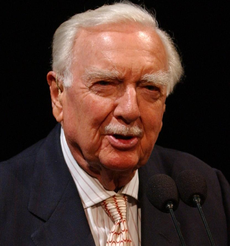

Forty years ago today on a warm summer day, lounging around at UCSD from where I had just graduated, along with several other engineering students, we were glued to the TV screen watching live the lunar landing of Apollo 11. The broadcaster was CBS's Walter Cronkite, my favorite TV anchor.
Cronkite died a couple of days ago. Many of the significant events of my formative years in the United States--such as the passing of MLK and RFK, Apollo 11 lunar landing, Nixon impeachment--I witnessed through his reporting lenses. In his news reporting era, Uncle Walter was rightfully called the most trusted man in America.
He got that distinction because we sensed that he maintained integrity by reporting the news simply, honestly and with neutrality. He never imposed upon his viewers his own opinions. He just told the story...that's the way it is.
We like that because we know we have enough of our own values and beliefs (some we deliberately chose for ourselves and others we probably adopted somewhat unknowingly) to deal with already. We don't need one more source of indoctrination from a TV anchor.
But how much do we really know what we value and what we believe?
Last LPG meeting, we did a number of exercises based on CTI to assess and explore that question. The result sometimes was surprising. A number of us reported that there were gaps between what we thought we were from how we really lived our lives. We didn't always live up to what we valued.
But that's the power of self-examination and inward exploration. Used properly, it gave us the insight to change our thoughts and change our lives.
The following are tools that we used to assess who and where we are.


Tuesday, July 14, 2009
Wisdom Calls
Wisdom often times appears when one least expects it to. Sorting out my over crowded coffee table in my man's cage, I found this retirement best wishes card from Jim and Kathryn last year. Many of the advices on that card ring wisdom:
- Relax and Enjoy yourself
- Try something new
- Imagine the possibilities
- Remember to play
- Expect adventures
- Make new plans
- Embrace the freedom
- Nap without guilt
- Take time just for you
Thursday, July 2, 2009
Practice Makes Perfect
As the saying goes: Practice makes perfect. Collaborative coaching, discussed and practiced in our last LPG meeting requires the coach to ask questions that are open, probing and non-judgmental and to be listening actively to what is being said and not said. It is a skill that requires practice to get good at.
The temptation and tendency is for the coach to jump in and cut short the exploration and suggests their opinion and become the "sage" and offers a "perfect solution". A solution that on paper may be perfect does not necessarily sing to the coachee because it did not come from their inner self. At best, it is another good idea that they might attempt to take up half-heatedly. At worse it causes them to react negatively: "Don't give me advice when I want you to listen to me."
As a facilitator for Diversity Council, I know the power of guiding a dialog and let the conversation flow and trust that the process itself will yield the insight. But knowing the value does not always mean I have the skill to do it. I was facilitating a Rochester neighborhood dialog last Tuesday, on a few occasions I found myself drifting from being a guide-on-the-side to a sage-on-the-stage to start voicing my own solutions. As soon as the words came out of my mouth I could sense that they had a stoppage effect on the group. They sucked the air out of the room. And it would take some effort to regain the conversation flow.
That's why we need more practices.
Next LPG meeting, Ji-Yun will take us through more exercises on how to ask the right questions, control our inner thoughts and pay attention to the other person.
The temptation and tendency is for the coach to jump in and cut short the exploration and suggests their opinion and become the "sage" and offers a "perfect solution". A solution that on paper may be perfect does not necessarily sing to the coachee because it did not come from their inner self. At best, it is another good idea that they might attempt to take up half-heatedly. At worse it causes them to react negatively: "Don't give me advice when I want you to listen to me."
As a facilitator for Diversity Council, I know the power of guiding a dialog and let the conversation flow and trust that the process itself will yield the insight. But knowing the value does not always mean I have the skill to do it. I was facilitating a Rochester neighborhood dialog last Tuesday, on a few occasions I found myself drifting from being a guide-on-the-side to a sage-on-the-stage to start voicing my own solutions. As soon as the words came out of my mouth I could sense that they had a stoppage effect on the group. They sucked the air out of the room. And it would take some effort to regain the conversation flow.
That's why we need more practices.
Next LPG meeting, Ji-Yun will take us through more exercises on how to ask the right questions, control our inner thoughts and pay attention to the other person.
Saturday, June 20, 2009
Last LPG meeting, Ji-Yun took us through a deeper meaning of coaching. As I was listening, it occurred to me, many times in my life I thought I was coaching someone when in fact I was trying to convince them, or give them advice or impart my beliefs on them. That is really not coaching...that is really saying to them: "Take two of these pills and call me in the morning."
Though there are times you have to resort to shaking some senses into someone especially when they are about to get run over by a freight train, in general I too have found that any past coaching success I might have was when I was able to establish a trusting relationship. Trust is honesty, compassion, patience, support and empathy. But it is not sympathy or feeling sorry for the other person.
As a coach, if I can create a sense of "I am here with you"--which is support and empowering the other to find their own solutions--and not crossing the line to create the impression of "I am here for you" which forms an attachment to the other person's drama while lessening their responsibility and power to find their own solutions then I am probably in the right mental frame.
Next Friday Ji-Yun will guide us to do some coaching exercises. Let's see how well I can create that right state of mind.
Though there are times you have to resort to shaking some senses into someone especially when they are about to get run over by a freight train, in general I too have found that any past coaching success I might have was when I was able to establish a trusting relationship. Trust is honesty, compassion, patience, support and empathy. But it is not sympathy or feeling sorry for the other person.
As a coach, if I can create a sense of "I am here with you"--which is support and empowering the other to find their own solutions--and not crossing the line to create the impression of "I am here for you" which forms an attachment to the other person's drama while lessening their responsibility and power to find their own solutions then I am probably in the right mental frame.
Next Friday Ji-Yun will guide us to do some coaching exercises. Let's see how well I can create that right state of mind.
Saturday, May 30, 2009
What have I learned on Thursday?
Ashok asked me what value-add I got from Thursday's Integrative Healing talk. If I have to name one thing, I would have to say I learned the 21st century's terminology to describe awakening.
Amit (tongue-in cheek, perhaps) calls it Logon. It's an apt metaphor in the computer age. After all, if one does not logon (or login) to a computer, one only has pens and paper to do math or write a note.
An unawakened (untrained) mind is a "monkey mind" that is busy with figuring, worrying, calculating, seldom at peace and certainly unoptimized. It is vague about creativity, joy, happiness, determination. It is unaware of the power that the quiet mind knows. What then is the power? It's the power to create.
Just think...the lecture was created by an intention--an intention of being connected to a cause and purpose that is higher than self. I got to know Ashok because we both served on the board of Diversity Council. We had the intention to help build an inclusive world. Similarly, ANG/LPG came into being and persist for more or less the same reason--an intention to share. From that intention, with no specific plan, friendship circles formed and grew and joined to form bigger circles. It's the old saying: one thing leads to another. With a trained mind, you can direct your attention to find the connections you want. Result, in this case, we got to logon to the same program, the same lesson, the same space on a lovely Thursday afternoon, people from all parts of the world got to enjoy the the same time/space continuum of the universe.
Coincidentally Amit the keynote speaker and Parul the IBMer in conversations after the talk found out that they both came from the same city in India and shared a common bond of a university there. In their hometown neighborhood, they had not known each other, but wonderfully and magically thousands of miles away on a lovely afternoon in an austere auditorium at a computer company, logged on, their paths finally crossed.
The way I look at it what I witnessed was a creation of the "Trained Mind"--an intentional, universal consciousness--a synchronicity. So, beyond the word lesson (ancient and modern wisdom) that Ashok and Amit shared with us on the scientific and medical benefit of breathing and meditation to good health was a world lesson--an experiential lesson, which says whatever you pay attention to the most, you will find. Seek and you shall find ... that is the ultimate value-add.
Amit (tongue-in cheek, perhaps) calls it Logon. It's an apt metaphor in the computer age. After all, if one does not logon (or login) to a computer, one only has pens and paper to do math or write a note.
An unawakened (untrained) mind is a "monkey mind" that is busy with figuring, worrying, calculating, seldom at peace and certainly unoptimized. It is vague about creativity, joy, happiness, determination. It is unaware of the power that the quiet mind knows. What then is the power? It's the power to create.
Just think...the lecture was created by an intention--an intention of being connected to a cause and purpose that is higher than self. I got to know Ashok because we both served on the board of Diversity Council. We had the intention to help build an inclusive world. Similarly, ANG/LPG came into being and persist for more or less the same reason--an intention to share. From that intention, with no specific plan, friendship circles formed and grew and joined to form bigger circles. It's the old saying: one thing leads to another. With a trained mind, you can direct your attention to find the connections you want. Result, in this case, we got to logon to the same program, the same lesson, the same space on a lovely Thursday afternoon, people from all parts of the world got to enjoy the the same time/space continuum of the universe.
Coincidentally Amit the keynote speaker and Parul the IBMer in conversations after the talk found out that they both came from the same city in India and shared a common bond of a university there. In their hometown neighborhood, they had not known each other, but wonderfully and magically thousands of miles away on a lovely afternoon in an austere auditorium at a computer company, logged on, their paths finally crossed.
The way I look at it what I witnessed was a creation of the "Trained Mind"--an intentional, universal consciousness--a synchronicity. So, beyond the word lesson (ancient and modern wisdom) that Ashok and Amit shared with us on the scientific and medical benefit of breathing and meditation to good health was a world lesson--an experiential lesson, which says whatever you pay attention to the most, you will find. Seek and you shall find ... that is the ultimate value-add.
Saturday, May 2, 2009
Finding your strengths
Watching CPAN Washington Journal this morning, which featured two high school teachers talking about the High School U. S. Government Exam and its importance to students getting into colleges, brought back memories of my first encounter with understanding the US government.
It was my freshman year in college as a foreign student from Hong Kong. For some reason, I was taking a US Government course. Since Hong Kong was a British Colony then (and would remain so until 7/1/1997), I had no personal experience of local, state and federal governments, no idea of the executive, legislative and judicial branches of government. Everything was strangely new and exciting about that US government course. I had to study very hard and I got an A on the course. My American classmates who had personal advantages were surprised how natural I came to know the subject.
In fact, history, government and literature were my best subjects in my first year of college. I still love them today.
I have often wondered how my life would turn out if I had pursued what was naturally easy and appealing to me instead of choosing "safe", left-brain oriented majors in computer/information science and electrical engineering.
Would I have been happier, more successful? Luckily, it's still not too late to ponder this kind of questions now that I am retired from IBM with most of my mental, physical faculties still working well enough.
In May, LPG will focus on the idea of finding and focusing on one's strengths.
It was my freshman year in college as a foreign student from Hong Kong. For some reason, I was taking a US Government course. Since Hong Kong was a British Colony then (and would remain so until 7/1/1997), I had no personal experience of local, state and federal governments, no idea of the executive, legislative and judicial branches of government. Everything was strangely new and exciting about that US government course. I had to study very hard and I got an A on the course. My American classmates who had personal advantages were surprised how natural I came to know the subject.
In fact, history, government and literature were my best subjects in my first year of college. I still love them today.
I have often wondered how my life would turn out if I had pursued what was naturally easy and appealing to me instead of choosing "safe", left-brain oriented majors in computer/information science and electrical engineering.
Would I have been happier, more successful? Luckily, it's still not too late to ponder this kind of questions now that I am retired from IBM with most of my mental, physical faculties still working well enough.
In May, LPG will focus on the idea of finding and focusing on one's strengths.
Subscribe to:
Posts (Atom)

 Posts
Posts

